Hire and reward insurance for a van: when you need it
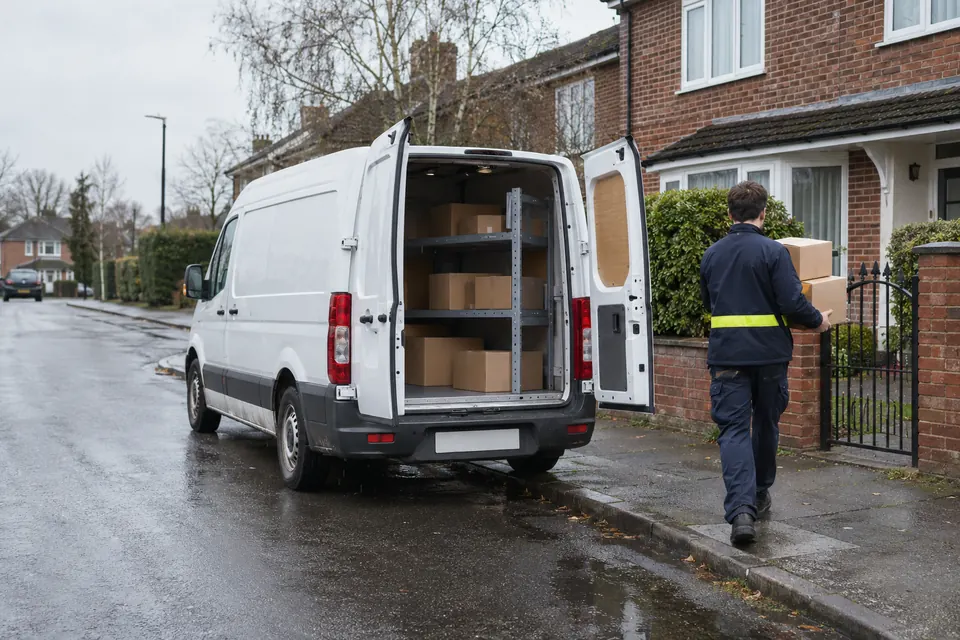
You need hire and reward insurance for a van whenever someone pays you to carry goods that belong to someone else: parcels, takeaways, a customer's furniture or a business's stock. It is a class of use on your van policy: it covers using the van for that work, not the goods you're carrying. If you only carry your own tools, stock or materials, the class you need is carriage of own goods.
In this guide
For how it fits alongside the other classes, see van insurance classes of use explained.
The test: whose goods, and who pays you to move them
Two questions settle most cases:
- Do the goods belong to you or your business?
- Is someone paying you to carry them?
If the goods are someone else's and carrying them is the job you're paid for, that is hire and reward. A plumber who buys a boiler and drives it to a customer's house to fit is carrying his own goods, even though the customer pays for the job. A courier taking the same boiler from the merchant to the same house is carrying someone else's goods for payment.
| Who | What's in the van | Usual class |
|---|---|---|
| Plumber driving to jobs | Own tools, parts bought for the job | Carriage of own goods |
| Farmer with a pickup | Own feed, fencing and tools | Carriage of own goods |
| Multi-drop parcel courier | Other people's parcels | Hire and reward |
| Man-and-van doing house moves | Customers' furniture and boxes | Hire and reward |
| Same-day driver doing one long run for a firm | That firm's goods | Hire and reward (sometimes labelled haulage) |
| Takeaway delivery in a van | Restaurants' food | Hire and reward that doesn't exclude food delivery |
| Florist delivering her own bouquets | Own stock, sold to the customer | Grey area: ask the insurer |
Helping a friend move house counts too. If they pay you for the job, you are carrying someone else's goods for payment. If you're unsure whether a small payment such as fuel money counts, ask the insurer before the move rather than after a claim.
Which class of use do I need? → Answer a few questions about the work you do to see the class of use to pick on a van insurance quote.Delivering your own products
Selling and delivering your own goods sits between the two classes: in DRN-4717286 the ombudsman treated a shop's deliveries as own goods because of the wording shown at sale, which the carriage of own goods guide explains in full.
Courier or haulage: how quote forms split it
Quote forms don't all label hire and reward the same way. The comparison site in DRN-4717286 called the class "Haulage (delivering goods for hire and reward)" and gave delivery drivers, couriers and haulage contractors as examples. Other forms and insurers use their own labels and boundaries, so match the definition to the work you actually do.
Hire and reward use can also come with a mileage limit. A policy schedule quoted in FOS decision DRN-5292739 limited business use, including hire and reward, to 100 miles from the address on the policy.
Questions to ask before you buy:
- I do local multi-drop work and sometimes a long single run. Does this class cover both?
- Is there a radius limit on hire and reward use, and how far is it?
- Does the class cover removals and furniture, or only parcels?
- Does it exclude food delivery?
What delivery platforms ask for
This is what their own pages said when we checked on 5 November 2026:
- Amazon Flex: the requirements page asks for hire and reward insurance plus at least social, domestic and pleasure cover. It accepts vans and enclosed-bed pickups, but the insurance line is written for cars and there is no separate one for vans. It lists partner insurers for cars and does not say Amazon provides any cover.
- Uber Eats: for car delivery, Uber's UK requirements say your insurance certificate must cover food delivery, or hire and reward that does not exclude food delivery.
- Evri: its courier FAQ says you need the right level of third-party cover while you're delivering, and insurance that covers courier work if you use a hire vehicle. Evri offers a top-up policy, through an insurer, that it describes as providing the third-party cover self-employed couriers need. It costs £1.35 a day, charged only on days you work for Evri. The FAQ doesn't say whether that top-up is motor cover, liability cover or both, or whether you can use your own cover instead.
For DPD, Yodel, Deliveroo, Just Eat or any other platform, read its current requirements page before you start. If the wording is unclear, ask the platform in writing what your certificate must say. Uber's rule shows why: some hire and reward policies exclude takeaway food.
Hire and reward doesn't cover the goods
Section 145(4)(d) of the Road Traffic Act 1988 says a motor policy does not have to cover damage to goods carried for hire or reward. Policies can leave goods out entirely: the schedule quoted in DRN-5292739 included the endorsement "Goods in Transit are not covered".
So if a parcel is stolen from the van, or a customer's sofa is damaged on a move, your hire and reward policy will usually not pay for it. That needs goods in transit insurance, which is a separate policy or add-on. Before you buy it, check:
- what your platform or customer contract makes you liable for when goods are lost or damaged
- whether the contract sets a minimum goods in transit limit
- whether the policy covers goods left in the van overnight, and on what conditions
Pay-as-you-go and top-up cover
If you only do delivery work some of the time, you don't always need hire and reward on an annual policy. For cars, Amazon Flex's page lists partner insurers offering cover by the hour, month or year. If a top-up runs alongside your own policy, check both sets of terms. Ask:
- Will my existing van insurer allow hire and reward cover from another insurer to run alongside its policy?
- When does the top-up start and stop? Does it cover driving to the first collection, or only time logged in to the app?
- Is the top-up comprehensive or third party only? If it's third party only, what happens if my van is damaged mid-shift?
- Does it cover vans, or only cars?
What happens if you deliver without it
If you use the van for something your certificate doesn't cover, you aren't insured for that journey. GOV.UK says police can give you a £300 fixed penalty and 6 penalty points. If the case goes to court, you face an unlimited fine and can be disqualified.
The insurer can also decline your own claim. If a court gives judgment for someone you injured, section 151 of the Road Traffic Act can require your insurer to pay it even when the insurer is entitled to cancel or void the policy, and in some cases lets it recover that money from you.
If you answered a clear question about use wrongly when you bought the policy, the insurer may be able to treat the policy as never having existed. In DRN-5292739, a double-cab pickup was insured for social, domestic and pleasure use only, although the owner had always meant to use it for his construction work. It was stolen. The ombudsman found the misrepresentation reckless or deliberate, so Haven could void the policy, decline the claim and keep the premiums.
Vans over 3.5 tonnes: operator licence
GOV.UK says your business needs a goods vehicle operator licence if it uses a vehicle with a gross plated weight over 3,500kg, or a vehicle and trailer with combined plated weights over 3,500kg. A restricted licence lets you carry only your own goods. To carry other people's goods you need a standard national licence for UK work, or a standard international licence for work abroad.
The rules for work abroad start lower. You need a standard international licence to carry other people's goods for payment in the EU, Iceland, Liechtenstein, Norway or Switzerland in a van with a maximum authorised mass over 2,500kg.
Goods vehicles fuelled entirely by alternative fuel, up to 4.25 tonnes and used only in Great Britain, are exempt, under Schedule 3, paragraph 31 of the 1995 operator licensing regulations. Northern Ireland has its own rules.
Your driving licence matters too. A standard category B licence covers vehicles up to 3,500kg, or up to 4,250kg for electric or hydrogen vehicles. Check a heavier van with the licence checker before you take on work in it, and give the insurer the van's gross weight when you ask for a quote.
Keep reading
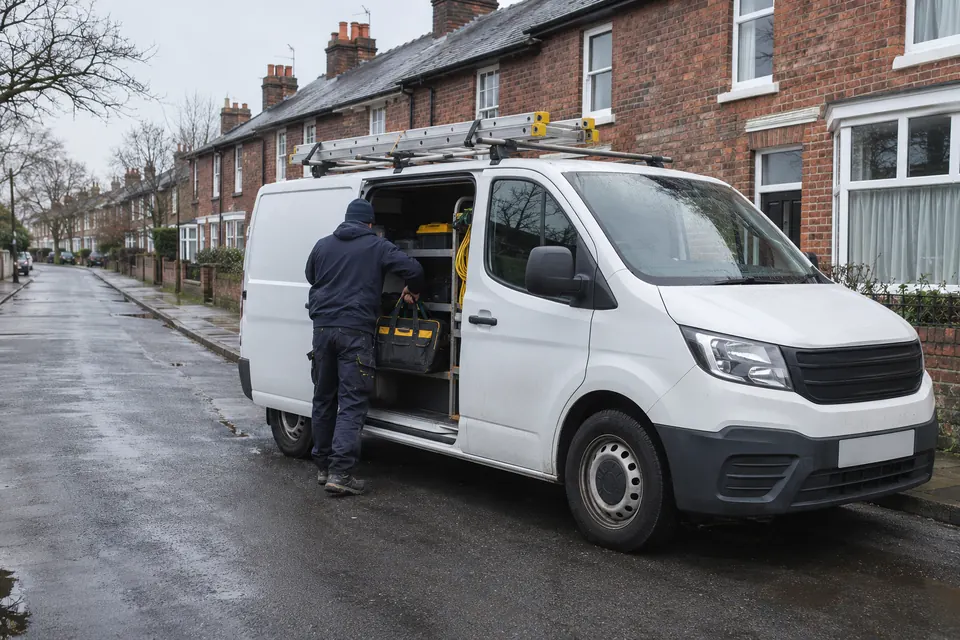
Van insurance class of use: which one do you need?
The four classes of use on a van quote, how insurers tell them apart, and what happens if the one you pick doesn't match how you use the van.
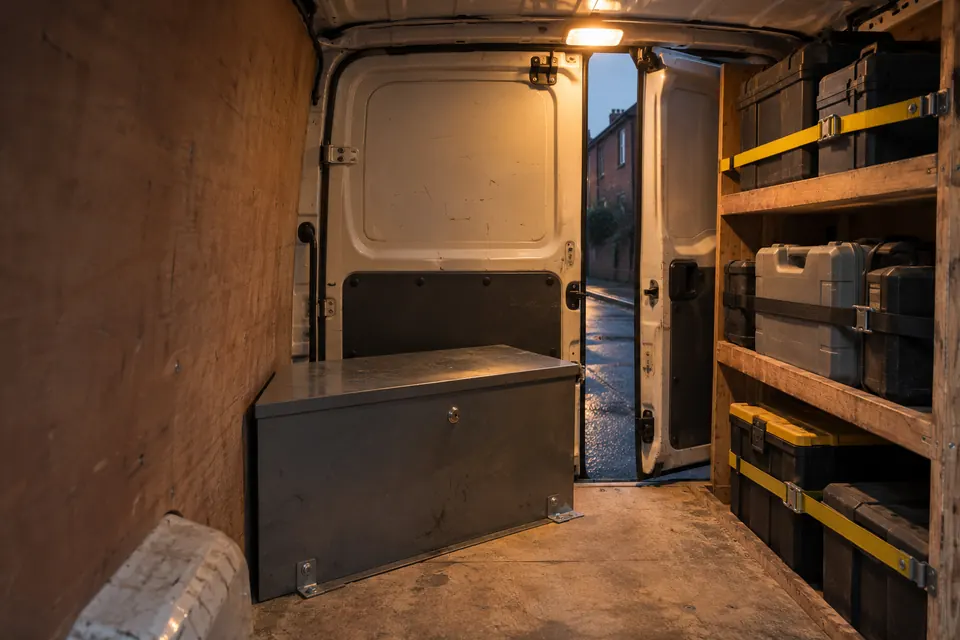
Carriage of own goods: what it means on van insurance
Carriage of own goods covers driving your van for work while carrying your own tools, stock and materials. It does not cover delivering for payment.
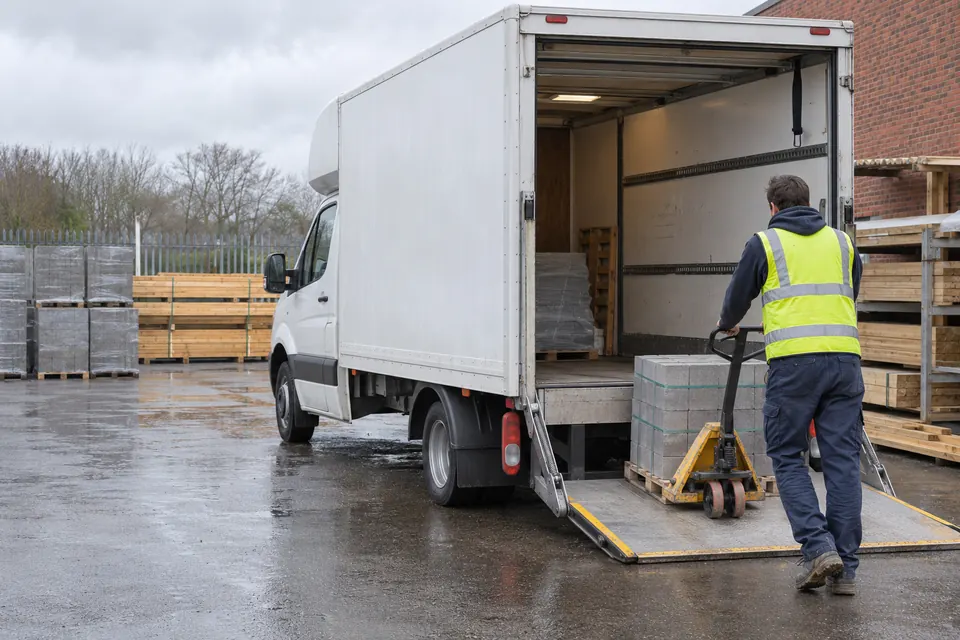
Can I drive a 3.5 tonne van on a car licence?
Yes, if its plated maximum weight is 3,500kg or less, or 4,250kg for an electric or hydrogen van. Anything heavier usually needs category C1.