Can I drive a 3.5 tonne van on a car licence?
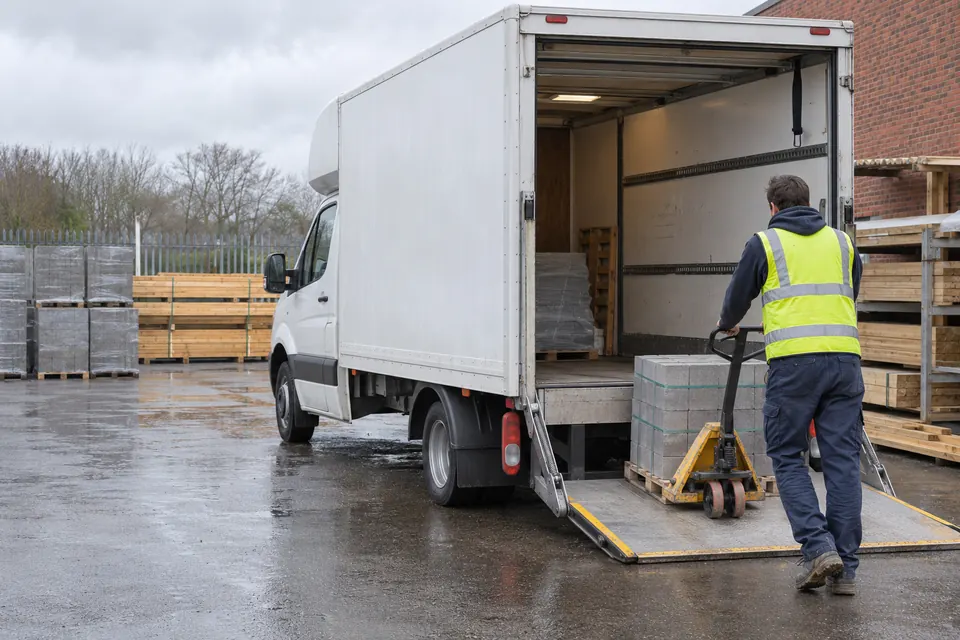
Yes. A full car (category B) licence lets you drive a van with a maximum authorised mass (MAM) of up to 3,500kg, and 3.5 tonnes is that limit. The figure that counts is the maximum weight shown on the van's plate, including its load, not what the van weighs empty. Electric and hydrogen vans can go up to 4,250kg on a car licence in Great Britain, and if you passed your test before 1 January 1997 you can usually drive up to 7,500kg.
In this guide
What "3.5 tonnes" actually measures
| Weight | What it means | Does it decide your licence? |
|---|---|---|
| Maximum authorised mass (MAM), also called gross vehicle weight (GVW) | The most the van may weigh fully loaded, with fuel, people and cargo | Yes |
| Kerb or unladen weight | What the van weighs with nothing in it | No |
| Payload | What you can put in it: the MAM minus the van's own weight | No, but going over it is overloading |
GOV.UK's vehicle weights page defines MAM as the vehicle's weight including the maximum load, listed in the owner's manual and normally on a plate or sticker on the van. The DVLA's towing leaflet, INF30 (PDF page 4), confirms that licence weights always mean the MAM.
So a van plated at 3,500kg is a category B vehicle whether empty or full, and a diesel van plated at 3,850kg needs more than a car licence even when empty. Loading a 3.5-tonne van past its MAM doesn't change your licence category, but it is overloading: GOV.UK's driving a van guidance says exceeding a maximum axle weight can mean a fine of up to £300 or a court summons.
The van guidance points to the vehicle identification number (VIN) plate, which GOV.UK's towing guidance says is normally under the bonnet or inside the driver's door.
Electric and hydrogen vans up to 4,250kg
The Department for Transport says battery weight can push a zero-emission van over 3,500kg (consultation response). To allow for that, the Motor Vehicles (Driving Licences) (Amendment) (No. 2) Regulations 2025 let category B holders drive zero-emission vans up to 4,250kg MAM from 10 June 2025.
The details that catch people out:
- Zero emission only. The regulation defines a zero-emission vehicle as one without an internal combustion engine, or one whose engine emits zero grams of CO2 per kilometre. GOV.UK's licence categories page says the 3,500kg limit applies to petrol and diesel vans and includes hybrids. A plug-in hybrid or a gas-powered van over 3,500kg is not covered.
- No training condition. The 2018 version of this rule required five hours of training with a registered instructor, goods-only use and no trailer. The consultation response confirms the 2025 rules removed the training requirement. GOV.UK's electric and hydrogen vehicle guidance lists optional specialist training.
- Your licence won't show it. GOV.UK says the photocard will not change to reflect this entitlement.
- Great Britain only. The regulations extend to England, Wales and Scotland. Northern Ireland sets its own rules, so check nidirect if you drive there.
A zero-emission van of up to 4.25 tonnes, used only in Great Britain, also falls outside goods vehicle operator licensing under Schedule 3, paragraph 31 of the operator licensing regulations. More on operator licences below.
Towing a trailer with your van
INF30 (PDF page 3) says that since 16 December 2021, anyone who has passed a car test automatically has category BE. If BE isn't on your photocard yet, GOV.UK's towing guidance says DVLA will add it when you next renew.
With BE you can tow a trailer of up to 3,500kg MAM, and the licence categories page says the combined MAM of vehicle and trailer must not exceed 7,000kg. The van's own limits still apply: the maximum towing weight is usually in the handbook, and the gross train weight is on the VIN plate. GOV.UK says a vehicle with no train weight on its plate shouldn't tow.
For a zero-emission van over 3,500kg, the same 7,000kg combined limit applies. GOV.UK's example: a 4,250kg van can tow a trailer of no more than 2,750kg.
Towing can also bring in an operator licence. If you tow for business and the plated weights of van and trailer add up to more than 3,500kg, you need one, unless the trailer's unladen weight is under 1,020kg and you carry only your own goods (GOV.UK).
If you passed your test before 1 January 1997
Older licences come with extra categories, often called grandfather rights. The DVLA's INF52 leaflet (PDF page 8) says that if you passed your car test before 1 January 1997, your licence will already show C1, C1E (8.25 tonnes), D1 and D1E, with the minibus categories limited to not for hire or reward.
In practice that means:
- C1 lets you drive vehicles between 3,500kg and 7,500kg MAM, with a trailer up to 750kg.
- C1E with code 107 lets you tow a heavier trailer, as long as the combination is no more than 8,250kg (licence codes).
Age 70 changes things. INF30 (PDF page 3) says the pre-1997 towing entitlement, C1E (107), normally lasts until your licence runs out at 70. To keep it, you send DVLA a D2 application with a D4 medical examination report signed by a doctor and an optician or optometrist, and you must meet the higher medical standards for lorry and bus drivers. Separately, GOV.UK's renewal at 70 page says C1 and D1 entitlements must be renewed by post, not online.
If you're not sure what's on your licence, check it on View your driving licence and look for restriction codes next to C1, such as 97 (no C1 vehicles that must have a tachograph) or 101 (not for hire or reward). Don't assume you have C1 because of your age.
Luton vans and 7.5-tonne trucks
A Luton's box body, extending over the cab, tells you nothing about the licence; only the plated weight does. A self-employed removals driver hiring one should read the plate or the hire paperwork first, because a heavier Luton needs more than a car licence.
Anything plated above 3,500kg (or above 4,250kg for zero emission) and up to 7,500kg needs category C1. INF30 says that if you passed your car test on or after 1 January 1997, you must pass an extra test to get C1 (PDF page 3), and gives 18 as the minimum age (PDF page 4). A 7.5-tonne truck therefore needs C1, either from a test or from a pre-1997 licence. Over 7,500kg you need category C.
Can I drive it on my licence? → Check whether your licence covers a 3.5 tonne van, a 4.25 tonne electric van, a Luton, a minibus or a trailer.The licence checker takes your test date, plated weight, fuel type and any trailer, and shows which category applies.
Business use of a van over 3.5 tonnes
Under section 2 of the Goods Vehicles (Licensing of Operators) Act 1995, you need a goods vehicle operator licence to carry goods in that van for payment or in connection with your business. GOV.UK sets the threshold at a gross plated weight over 3,500kg.
The type of licence follows the same split as van insurance. A restricted licence covers your own goods only. A standard national licence also lets you carry other people's goods in the UK.
Three examples with diesel vehicles plated over 3,500kg:
- A builder with a tipper carrying their own materials needs C1 (or pre-1997 rights) and a restricted operator licence.
- A courier with a large van delivering parcels for payment needs C1, a standard national operator licence and, because driving is the job, a Driver CPC.
- Someone hiring a 7.5-tonne Luton for their own house move needs C1, but not an operator licence, because section 2 covers only paid and business carriage. GOV.UK's Driver CPC examples say a private house move needs no Driver CPC either.
Driver CPC covers C1 vehicles under regulation 2 of the Driver CPC regulations. One exemption covers carrying material or equipment you use for your job while driving is under 30% of your rolling monthly working time, so the builder may not need it. Drivers' hours and tachograph rules also apply once the vehicle or combination is over 3.5 tonnes, with their own exemptions.
What to tell your insurer
Driving a vehicle your licence doesn't cover is an offence under section 87 of the Road Traffic Act 1988, and GOV.UK's van guidance gives the penalty as a fine of up to £1,000 and 3 to 6 penalty points. A van insurance quote usually asks for your licence type, how long you've held it, and the van. Give the plated weight and your actual categories, not a guess.
The licence and the policy are separate questions. Your licence can allow a vehicle that a particular policy doesn't cover. Before you buy, ask the insurer or broker:
- "The van is plated at [weight]kg. Is that within the vehicles this policy covers?"
- "It's a zero-emission van over 3,500kg that I'll drive on a category B licence. Do you need anything extra from me?"
- "I'm relying on pre-1997 C1 entitlement. Do you need to see it on my licence record, and what changes when I reach 70?"
- "I'll tow a trailer of up to [weight]kg. Do I need to declare it, and is it covered when it's attached?"
- "Who else will drive it, and does each named driver hold the right category?"
Use matters as much as weight. The same 3.5-tonne van can need different cover depending on whether you carry your own tools or other people's parcels. Carriage of own goods and hire and reward explain where that line falls.
Keep reading
Van insurance class of use: which one do you need?
The four classes of use on a van quote, how insurers tell them apart, and what happens if the one you pick doesn't match how you use the van.
Carriage of own goods: what it means on van insurance
Carriage of own goods covers driving your van for work while carrying your own tools, stock and materials. It does not cover delivering for payment.
Does signwriting affect van insurance?
It can. Some insurers treat signwriting and wraps as a modification you must declare. Whether the price changes depends on the insurer.