Does signwriting affect van insurance?
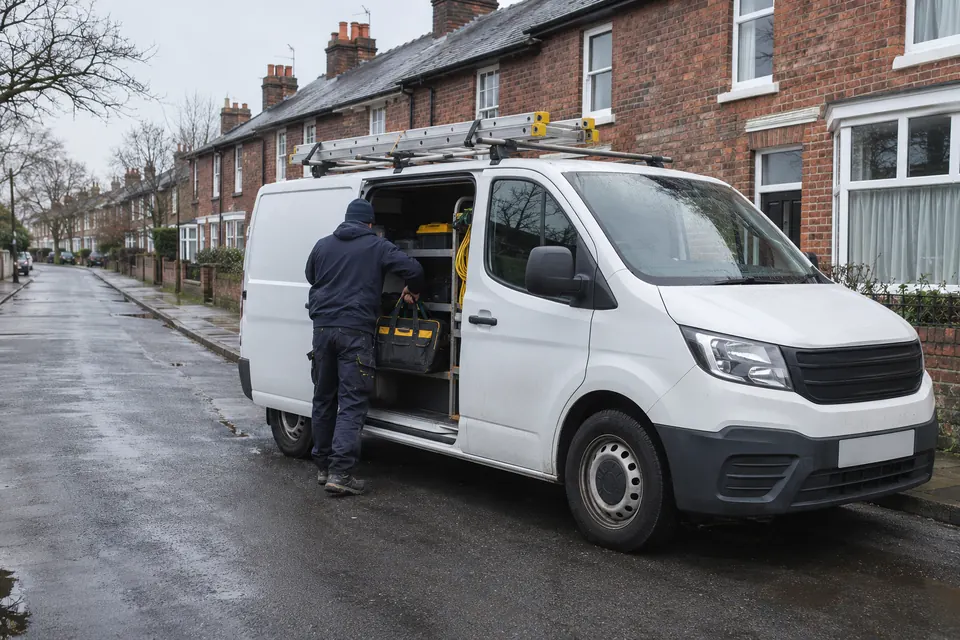
Yes, it can. Some insurers and policy wordings count signwriting, livery and vinyl wraps as a modification, so tell your insurer before the van goes out with it on, or straight away if it already has it. Whether your premium changes is the insurer's decision, and there is no rule that holds across the market. What matters most is that the insurer knows, because an undeclared change can lead to a reduced claim payment or no cover at all.
In this guide
Why insurers treat signwriting as a modification
Van policies can require you to report any change from the manufacturer's standard specification, and some name signwriting outright. In Financial Ombudsman decision DRN-3755053, the policy said modifications included "optional fit extras, wraps, signwriting, alloy wheels, bodywork". In DRN-3357128, the booklet said every change from the manufacturer's standard specification had to be disclosed and that its list of examples was not complete.
Admiral's guide to signwriting says some insurers, Admiral included, count signwriting as a modification. Its reason is that lettering can make thieves think the van holds tools or other valuables. The same guide says this can increase the cost "in some cases, but not always", and that the insurer may ask for a photo.
Signwriting also advertises that the van is used for a business. The lettering doesn't change your class of use, but the work it advertises might. A policy for social, domestic and pleasure use only won't cover driving to jobs, so check that your class of use fits the work you actually do.
What happens if you don't tell your insurer
The law decides what the insurer can do, and the answer depends on whether you were careless or dishonest. Which Act applies depends on who bought the policy and why.
If you are an individual and insured the van wholly or mainly for purposes unrelated to your trade, it is a consumer contract under the Consumer Insurance (Disclosure and Representations) Act 2012. You must take reasonable care not to misrepresent anything when you buy or change the policy. Under section 2(3), failing to confirm or amend details when the insurer asks, for example at renewal, can count as a misrepresentation.
If you insured it mainly for your trade, or the policy is in a company's name, the Insurance Act 2015 applies. You must make a "fair presentation of the risk", which means disclosing every material circumstance you know or ought to know, not just answering the questions on the form. In DRN-5292739, about a double-cab pickup insured by an individual, the Ombudsman found the policy was most likely a consumer contract but said the outcome would be the same under the 2015 Act.
Both Acts set out similar remedies in Schedule 1 (2012 Act, 2015 Act):
| If the insurer had known, it would have | What it can do |
|---|---|
| Refused to insure the van | Treat the policy as void from the start and refuse all claims, but refund the premiums |
| Insured it on different terms, such as an exclusion or a higher excess | Treat the policy as if those terms applied |
| Charged a higher premium | Pay only a proportion of the claim |
| Any of the above, and the failure was deliberate or reckless | Treat the policy as void, refuse all claims and keep the premiums (under the 2012 Act, unless keeping them would be unfair) |
The Explanatory Notes to the 2015 Act give an example of the proportionate reduction: if the insurer charged £10,000 but would have charged £15,000, it can reduce the claim by a third.
Changes made partway through the policy count too. In DRN-3357128, a van owner began converting his van into a campervan during the policy year and told Ageas only after hitting a parked vehicle. The Ombudsman found he had an ongoing duty to report significant changes and did not uphold his complaint. In DRN-3755053, Covea retrospectively cancelled a policy after the owner fitted an extra window and a sleeping area without telling it; the Ombudsman said insurers should only change a policy mid-term when the nature of the risk changes fundamentally, and found that it had. Signwriting is a much smaller change than a camper conversion, but if your policy lists it, not reporting it is still a breach of the terms.
Signwriting, wraps and magnetic signs compared
| Painted or vinyl lettering | Full or part wrap | Magnetic panels | |
|---|---|---|---|
| Can change the van's main colour | No | Yes, if it covers most of the van | No |
| Named as a modification in policy wording | Yes, in the policy quoted in DRN-3755053 | Yes, in the same policy | Not stated in the sources checked |
A wrap that changes the van's overall colour raises another question. GOV.UK says you must update your V5C log book when you change the vehicle's colour, but it doesn't say whether a wrap counts. If a wrap means your van no longer looks like the colour on its V5C, ask DVLA, and make sure the colour on your insurance matches.
Admiral's guide describes magnetic panels as a good option for temporary signs. None of the published wordings checked for this guide say whether a magnetic sign counts as a modification. If you use them, ask the insurer whether they need to know, and don't assume that being removable means they don't.
Worked example
An electrician puts magnetic panels on his van on weekdays and takes them off for family use at weekends. He asks the insurer whether the panels need declaring and records the answer. He drives to jobs on weekdays, so his policy needs to include business use whether or not the panels are on.
Which class of use do I need? → Answer a few questions about the work you do to see the class of use to pick on a van insurance quote.Signwriting value after an accident
Signwriting can also affect what you get back after a claim, and evidence of it matters. In DRN-4866657, a construction firm's vehicle was written off and Aviva's first settlement left out its signwriting, lining and roof bars. The Ombudsman said they should have been included, but noted that Aviva had asked for details of at least some of them and had not received them. Aviva later added £500 for these features, and the Ombudsman saw no evidence that this sum was unfair. For the firm's second vehicle, which was repaired, the Ombudsman said it was unlikely that all the signwriting needed replacing, because only part of the vehicle was damaged.
Some policies cap what they pay for signwriting. Admiral's guide, for example, says its comprehensive van cover pays up to £150 if signwriting is damaged by an accident, vandalism or fire. If your livery cost more than your policy's limit, ask whether you can raise it. Keep the invoice and photos either way, because the insurer may ask for evidence of what was fitted and what it cost.
Other changes to declare at the same time
The wordings quoted in the Ombudsman decisions above cover changes from the manufacturer's specification generally, so list everything in one go. Common changes on vans include:
- racking, shelving and ply-lining in the load area
- roof racks, roof bars and ladder clamps
- tow bars
- alloy wheels and body kits
- extra locks, alarms and trackers; on a business policy the Insurance Act 2015 says you need not volunteer something that lowers the risk unless asked, but answer if the quote form asks
- conversions of any kind, which can change what the vehicle is
Declaring a roof rack or racking doesn't mean the ladder or tools on it are covered. See does van insurance cover tools? for how tools cover usually works.
What to tell the insurer
Contact the insurer or broker before the van goes out with the new livery, or as soon as you can if it already has it. Ask:
- "I've had signwriting / a wrap / magnetic panels put on the van. Does this need adding to the policy as a modification?"
- "Does it change my premium or excess?"
- "Is the signwriting covered if it's damaged or the van is written off, and up to what amount?"
- "My signwriting advertises my trade. Does my class of use cover that work?"
- "Do you need a photo or the invoice?"
Then check that the change appears on your updated statement of fact or schedule. If it doesn't, ask for it to be corrected in writing. Do the same at renewal: read the modifications section of the renewal documents and correct anything that is out of date, because under the 2012 Act failing to update details when asked can count as a misrepresentation.
Keep reading
Does van insurance cover tools? Limits, overnight rules and claims
Not automatically. Tools are covered only if your policy has a tools section or you add tools cover, and that cover has its own limits and theft conditions.
Van insurance class of use: which one do you need?
The four classes of use on a van quote, how insurers tell them apart, and what happens if the one you pick doesn't match how you use the van.

Can I drive a 3.5 tonne van on a car licence?
Yes, if its plated maximum weight is 3,500kg or less, or 4,250kg for an electric or hydrogen van. Anything heavier usually needs category C1.