Does van insurance cover tools? Limits, overnight rules and claims
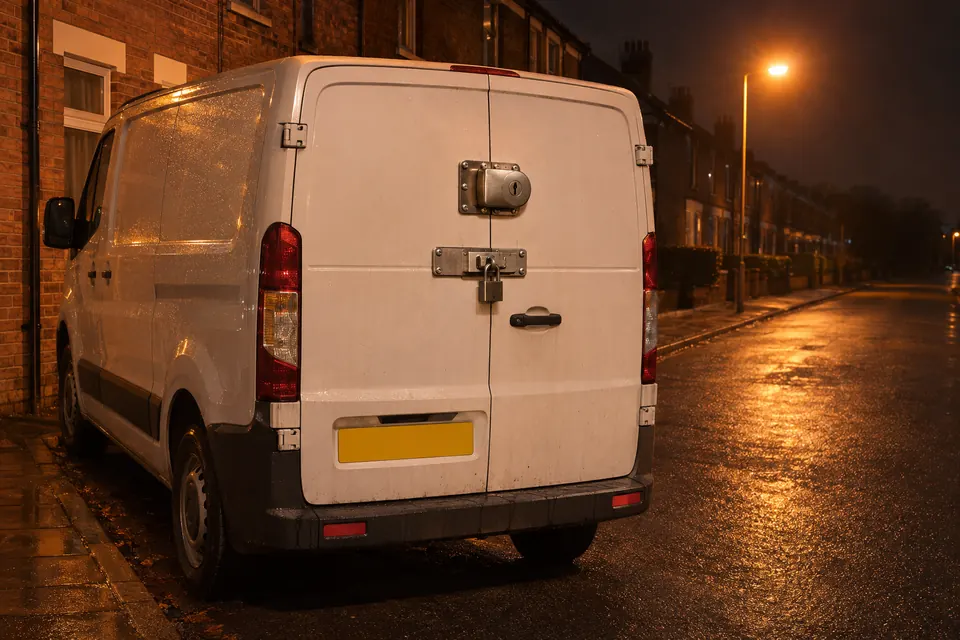
Not automatically. A van policy insures the van, and the tools inside are covered only if the policy has a tools section or you add separate tools cover. That cover has its own limit and its own conditions about locking, forced entry and where the van is parked at night, so check the schedule rather than assuming.
In this guide
Picking the right class of use does not change this. Carriage of own goods lets you drive the van for work while carrying your tools, but it does not insure the tools themselves. The carriage of own goods guide explains that class in detail.
What a van policy can say about tools
Policies range from a flat exclusion to a built-in tools section.
- A flat exclusion. The schedule of a commercial vehicle policy on a double-cab pickup, quoted in Financial Ombudsman decision DRN-5292739 (24 February 2025), carried the endorsement "Tools left in the vehicle are not covered".
- A tools section. The commercial vehicle policy in DRN-3956061 covered tools up to £10,000, with a £250 excess for theft from an unattended vehicle.
- Nothing either way. If the schedule, the policy wording and the endorsements never mention tools, treat them as not covered until the insurer confirms otherwise in writing.
A plumber with a few thousand pounds of press-fit tools, cordless kit and a pipe threader can have a fully comprehensive van policy and still have no cover for the contents. Search the schedule, the wording and every endorsement for the word "tools". If it does not appear, ask.
How tools-in-transit add-ons work
A tools-in-transit add-on is usually a separate policy sold alongside the van insurance. One published example is the tool cover wording sold through the broker Brightside (URIS/BS/TiT/1019); the PDF dates from 2020. It shows the kind of terms to look for, not what any insurer sells today. Among other things, it:
- runs alongside the motor policy for up to 12 months and is cancelled if the motor policy is cancelled
- covers tools while they are loaded onto, carried in, kept in or unloaded from the insured van
- has a sum insured of £2,500 or £5,000, which is the most it pays for one claim and for all claims in the period, with a £100 excess per claim
- excludes electronic equipment, personal belongings, property carried for hire or reward, and fixtures and fittings attached to the van
- replaces items with similar ones and says it is not new for old, so depreciation is not covered
- excludes any loss or damage if the van is left unattended or unchecked for more than 48 hours
- requires proof of purchase, and a police crime reference number for a theft claim
Overnight and unattended-vehicle conditions
In every claim discussed below, the outcome turned on locking and security, not on the value of the tools.
The same wording refuses theft claims from an unattended van unless every door, window and opening was locked, any extra security was switched on, and there is visible evidence that force was used to get in. Between 10pm and 6am it adds an overnight rule: tools left in the van are covered only if it is in a locked building, a compound with locked gates, or alarmed on your own driveway beside your home. If none of those is possible, the van must be in a well-lit spot on the same street, clearly visible from where you are staying that night. Otherwise you must take the tools out. The overnight rule does not apply while you are working at a customer's premises during those hours.
Other policies set other hours and other lists of acceptable places. The policy in DRN-5292739 had an overnight endorsement on the vehicle itself, declining claims if it was damaged or stolen overnight away from the declared locked building or compound, private driveway or carport. If you park on the street outside a flat, find out exactly what your wording requires before you leave tools in the van overnight.
What the Financial Ombudsman has decided
If an insurer declines a tools claim, complain to it first. If your business is within the Ombudsman's size limits for small businesses, you can then take the complaint to the Financial Ombudsman Service. The Ombudsman decides what is fair in each case, so these decisions show how it approaches tools claims, not rules other insurers must follow.
Locked van, no damage: claim upheld
In DRN-3956061 (29 March 2023), a business's tools were stolen from its van while the driver was in a shop. CCTV showed the thief failing to open the locked back doors, then getting in through a side door without damage, probably using an electronic device. Covea declined the claim. Its tools exclusion required a securely locked vehicle and evidence of "forcible and violent entry", and it argued the van had not been locked.
The Ombudsman accepted that a strict reading of the exclusion supported the decline. But the evidence showed the van was most likely locked, and refusing the claim because the thief used a device rather than smashing a window was unfair. Covea was told to pay the claim with interest and £150 for the inconvenience.
No proof the van was locked: claim declined
DRN-4658840 (29 July 2024) went the other way. A company's equipment and tools went missing from a vehicle on the drive back from a client, either at a service station or outside the office. Its commercial combined policy excluded theft from an unattended vehicle unless it was locked, with security devices on and keys removed. A dealership's evidence showed the vehicle had no keyless entry, so the Ombudsman was not persuaded that the code grabber the company suggested would have worked. It also thought it unlikely that someone forced a door, set off the alarm and unloaded bright yellow cases in a busy service station car park without anyone noticing. It accepted the vehicle was more likely left unlocked and did not uphold the complaint.
The difference was evidence. CCTV of the thief failing on a locked door helped the first business. The second could not show how a thief got into a locked vehicle.
Conditions unrelated to the loss
Under section 11 of the Insurance Act 2015, an insurer cannot rely on a breach of a term meant to reduce the risk of loss if you can show the breach could not have increased the risk of the loss that actually happened. In DRN-4686604 (15 March 2024), about a stolen van rather than tools, the rear doors were open while the owner worked on a private driveway, but the thief took the keys from his jacket. The Ombudsman said the open doors made no difference to that theft and told the insurer to settle the claim. That point cuts both ways: it will not help if the unlocked door is how the thief got in.
What to ask before you rely on tools cover
Ask the insurer or broker these questions, and get the answers in writing:
- "Are tools in the van covered under this policy, and if so, up to what total?"
- "Is there a limit for any single item, and does it apply to sets?"
- "Are cordless tools, batteries, laptops and test meters covered, or excluded as electronic equipment?"
- "What are the overnight hours, and where must the van be parked for tools left in it to be covered?"
- "Do you need visible signs of forced entry, and what happens if the lock is beaten electronically?"
- "Is the settlement new for old, or replacement minus wear and tear?"
- "Does cover apply while I am at a customer's site, or while tools are out of the van?"
- "Do you require any particular security, such as deadlocks or a tool vault, for tools cover to apply?"
Then keep the evidence a claim will need: receipts or order confirmations, serial numbers, and dated photos of the kit. Report any theft to the police straight away and get a crime reference number.
Covering tools outside the van policy
If the add-on limits are too low or the overnight rules do not fit how you work, ask a broker about other types of business cover:
| Type of cover | What it is for | Check |
|---|---|---|
| Tools-in-transit add-on | Tools while in or being loaded into one named van | Total and single-item limits, overnight hours, forced-entry wording |
| Tools policy bought separately | Tools under a policy not tied to the van insurance | Whether it covers tools on site and in storage, and the security conditions for each |
| Goods in transit or commercial combined | Equipment and stock as part of a wider business policy | The unattended-vehicle exclusion, as in DRN-4658840 |
Goods in transit for couriers is different again: it covers other people's goods you are paid to carry. If that is your work, see hire and reward van insurance. If you are unsure which class of use your van needs alongside any tools cover, the class of use tool takes a few questions.
Which class of use do I need? → Answer a few questions about the work you do to see the class of use to pick on a van insurance quote.Keep reading
Carriage of own goods: what it means on van insurance
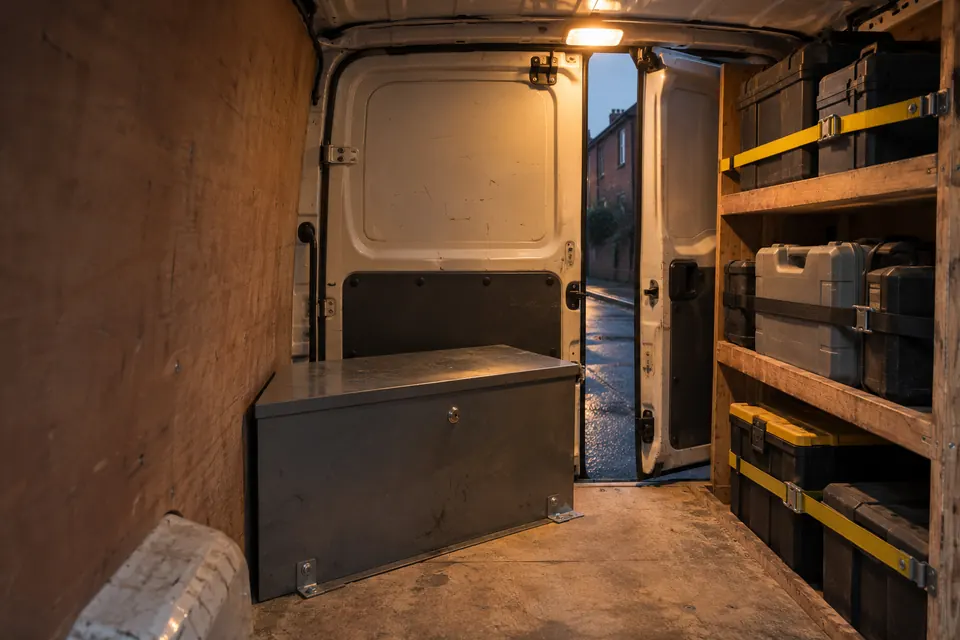
Carriage of own goods covers driving your van for work while carrying your own tools, stock and materials. It does not cover delivering for payment.
Does signwriting affect van insurance?
It can. Some insurers treat signwriting and wraps as a modification you must declare. Whether the price changes depends on the insurer.
Van insurance class of use: which one do you need?
The four classes of use on a van quote, how insurers tell them apart, and what happens if the one you pick doesn't match how you use the van.