Social, domestic and pleasure van insurance: can you use it for work?
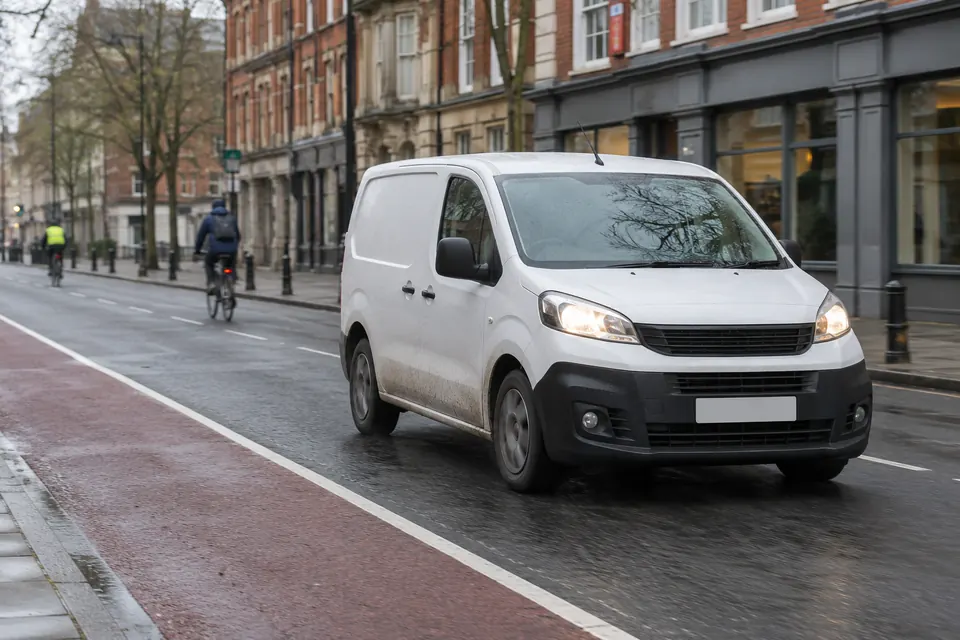
Social, domestic and pleasure (SD&P) van insurance covers personal use only: shopping, days out, hobbies, moving your own belongings and taking your own household rubbish to the tip. It does not cover driving to work, and it never covers using the van for your job or carrying other people's goods for payment. If any of that applies, even now and then, you need a higher class of use.
In this guide
What SD&P covers and who it suits
SD&P is the lowest rung of the van class of use ladder. It suits people who own a van or pickup for their own life rather than their living. For example:
- a cyclist or surfer who carries kit to the coast at weekends
- a family that uses an old panel van for DIY materials and garden furniture
- someone renovating their own house who collects timber and plasterboard for it
- a retired builder who kept the pickup but no longer works
The limit is written on your certificate of insurance under "limitations as to use". In one certificate quoted by the Financial Ombudsman Service, the wording allowed use only for social, domestic and pleasure purposes and excluded use by any person for travel to and from a place of work, business or study (FOS DRN-5292739). The words "any person" matter: the limit applies to every driver on the policy, not only you.
Commuting is a separate class
Driving to and from work is not SD&P. Quote forms commonly list "SD&P plus commuting" as a separate option. The certificate above also shut out trips to a place of study, so check yours if you drive to college.
Commuting normally means one place of work. In a 2024 decision, the quote website's note said commuting meant travel to a single permanent place of work, and business use meant travelling to more than one location for business. The van was insured for SD&P and commuting, but the policyholder's father, a self-employed construction worker named on the policy, was its main driver and used it to get to different work locations. The ombudsman found the insurer was entitled to avoid the policy, refuse the claim and keep the premium (FOS DRN-4565125).
So if you drive to one office, depot or factory and back, SD&P plus commuting may fit. If you are a plasterer whose site changes every few weeks, it probably does not.
Can you ever use SD&P for work?
No. An SD&P certificate limits use to social, domestic and pleasure purposes, so a work trip falls outside it whether you make it once a year or every day. Work use includes:
- carrying tools, materials or stock for your trade, which is usually carriage of own goods
- driving between jobs, sites or customers, which is business use
- delivering parcels, takeaways or anything else for payment, which is hire and reward
Being an employee does not change this. The pickup owner in the case further down worked for someone else in construction. If your employer expects you to bring your van to site, or to carry its tools, tell the insurer.
The same applies to named drivers. If your partner runs a dog-walking round from the van, it needs a class that covers their business, and the insurer needs to know whose business it is.
Moving house, tip runs and helping friends
The test is whose goods are in the back and whether anyone pays you to carry them.
| What you are doing | Within SD&P? | What to check |
|---|---|---|
| Moving your own belongings to a new home | Yes | Nothing extra for the class of use |
| Taking your own household rubbish to the tip | Yes | Your council's rules for vans at recycling centres |
| Helping a friend move, unpaid | Usually yes | Ask whether fuel money counts as payment |
| Helping a friend move for cash | No | Describe the job and ask which class covers it |
| Clearing a neighbour's shed for a fee | No | Hire and reward cover and a waste carrier registration |
| Giving lifts where passengers share running costs | Third-party cover still applies if the legal conditions are met | The section 150 conditions below |
Tip runs
Your own household waste is domestic use, but councils may restrict vans at recycling centres. Cheshire East, for example, asks residents with a van, pickup or a trailer of a certain size to get a free permit. It refuses trade or business waste, and waste you were paid to take (Cheshire East Council).
Clearing other people's rubbish for money means carrying someone else's goods for payment, so expect to need hire and reward cover. Insurers word this differently, so describe the work when you get a quote. In England, a business that transports waste must also register as a waste carrier. Registration is usually free if you only carry waste you produce yourself; otherwise it costs £191.02 (GOV.UK).
Helping a friend move
Carrying their sofa for nothing is a favour. Carrying it for £50 is carrying goods for reward, which falls outside social, domestic and pleasure use. The law has one narrow override of hire-or-reward exclusions, and it covers passengers only. It applies where passengers pay separate fares that come to no more than the running costs of the journey, the vehicle is adapted to carry no more than eight passengers, and the fares were arranged before the journey began. Even then, it protects only the compulsory third-party cover (Road Traffic Act 1988, section 150). There is no matching rule for goods. Whether a friend's fuel money turns a favour into reward depends on your insurer's wording, so ask before you go.
Which class of use do I need? → Answer a few questions about the work you do to see the class of use to pick on a van insurance quote.Campervans and van conversions
The DVLA will consider changing the body type to "motor caravan" only if the van has permanent features such as side windows, a separate door to the living area and a high or pop-top roof. Inside, it needs seats, a table, sleeping space, cooking and storage fixed in place. GOV.UK says the body type is about appearance and identification and should not affect the vehicle's insurance category (GOV.UK).
A kitchen, bed and leisure battery are modifications, and they add value an ordinary van policy may not reflect. Before you buy, ask:
- Do you cover the van as converted, or only as a standard panel van?
- Are the fixtures and fittings covered if it is stolen or written off, and up to what value?
- Am I covered while sleeping in it or parked overnight away from home?
- Should I insure it on a van policy or a motorhome policy?
What happens if you choose SD&P and use the van for work
A 2025 ombudsman decision shows what is at stake. A man insured a double-cab pickup on a comprehensive commercial vehicle policy, found through a comparison site and a broker. Asked "What is the van used for?", he chose "Personal use only", so the policy was written as SD&P. It was renewed three times. When the pickup was stolen from his driveway, he said he had always meant to use it in connection with his job as an employee in construction.
He told the investigator he used it to pass by the work site on the way to personal appointments. The ombudsman found the question was clear and that he had either known his answer was untrue or not cared. The misrepresentation was therefore deliberate or reckless. The insurer was entitled to treat the policy as void from the start, refuse the theft claim and keep the premiums.
A policy you take out wholly or mainly for purposes unrelated to your trade, business or profession is a consumer contract (Consumer Insurance (Disclosure and Representations) Act 2012, section 1). For deliberate or reckless misrepresentation, the insurer may avoid the contract, refuse all claims and keep the premiums unless keeping them would be unfair to you. For a careless mistake, the remedy depends on what the insurer would have done if it had known: refuse cover altogether but refund the premiums, apply the different terms it would have set, or pay only a proportion of the claim if it would have charged more (CIDRA Schedule 1). Business policies fall under the Insurance Act 2015, with similar outcomes for deliberate or reckless breaches.
A journey outside your class of use may also leave you uninsured for that journey. The police can give you a £300 fixed penalty and 6 points for driving a vehicle you are not insured to drive. If it goes to court, you face an unlimited fine and a possible ban (GOV.UK).
What to ask your insurer
If you are not sure SD&P fits, write down what you actually do with the van and ask:
- Does this policy cover driving to my one place of work, or do I need commuting added?
- If I drive to more than one site, or carry my tools, which class do I need?
- Does any payment from a friend, including fuel money, count as hire or reward?
- If my circumstances change mid-term, how do I change the class of use, and what will it cost?
Get the answer in writing, and check that the "limitations as to use" on your new certificate matches it.
Keep reading
Van insurance class of use: which one do you need?
The four classes of use on a van quote, how insurers tell them apart, and what happens if the one you pick doesn't match how you use the van.
Carriage of own goods: what it means on van insurance
Carriage of own goods covers driving your van for work while carrying your own tools, stock and materials. It does not cover delivering for payment.
Can I drive a 3.5 tonne van on a car licence?
Yes, if its plated maximum weight is 3,500kg or less, or 4,250kg for an electric or hydrogen van. Anything heavier usually needs category C1.